
ACLS and PALS
ACLS and PALS Courses We Offer
Advanced Cardiovascular Life Support (ACLS)
Pediatric Advanced Life Support (PALS)
Instructor lead courses to be offered soon.
Advanced Cardiovascular Life Support (ACLS)
This course is designed for healthcare professionals who direct or manage cardiopulmonary arrest or other cardiovascular emergencies; personnel in emergency response, emergency medicine, intensive care, and critical care units; physicians, nurses, and paramedics; and others who need an ACLS course completion card for job or other requirements.
ACLS for Experienced Providers:
ACLS is an advanced course that builds on the foundation of lifesaving BLS skills, emphasizing the importance of continuous, high-quality CPR, and high-performance team dynamics.
Heartcode ACLS Online (Product Number : 25-3554) is to be completed prior to coming to this hands on portion. Please bring your completed course certificate.
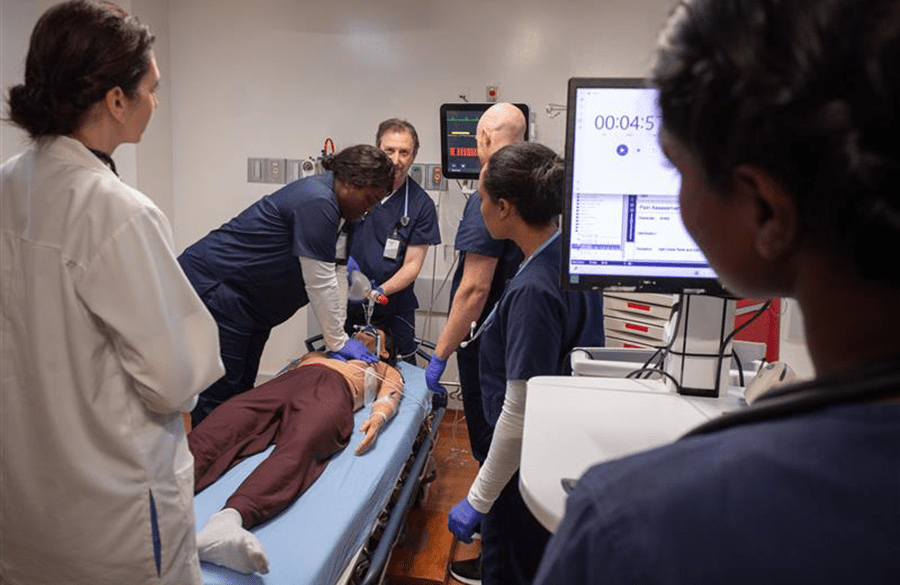
Providers first complete the online portion of HeartCode ACLS and then complete a hands-on skills session with an AHA ACLS Instructor or a HeartCode compatible manikin.
The 2025 Guidelines HeartCode uses a personalized adaptive algorithm that sets students on the most efficient path to mastery. Students follow a continuously adapting learning path that is personalized by their own inputs: their performance, and their self-reported confidence level related to each probing question. The course content is presented in the form of self-directed learning content, probing questions, and Cognitive Assessment Activities (CAAs).
With the new adaptive learning format, the timing for completing the online portion of HeartCode® ACLS Online can vary depending on the student’s level of experience. The hands-on session for HeartCode® ACLS will take approximately 6.75 – 7.75 hours with breaks.
With the new adaptive learning format, the timing for completing the online portion of HeartCode® ACLS Online can vary depending on the student’s level of experience. The hands-on session for HeartCode® ACLS will take approximately 6.75 – 7.75 hours with breaks.
ACLS Provider Course Completion Card, valid for two years
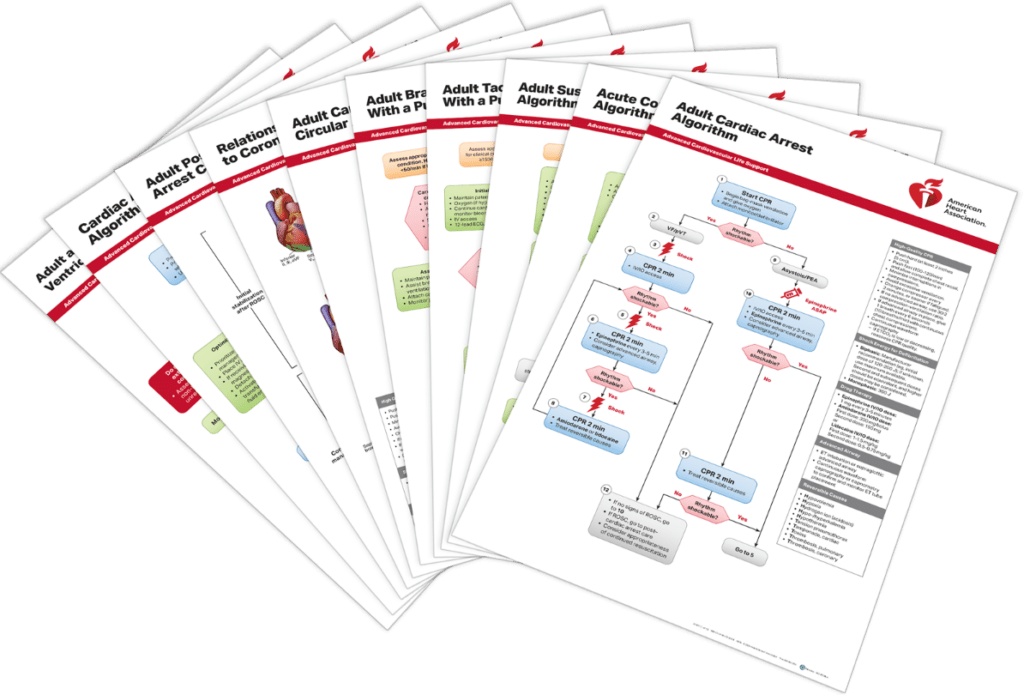
Adult Cardiac Arrest Algorithm:
Blended Learning HeartCode® PALS
Pediatric Advanced Life Support (PALS) uses a series of videos and simulated pediatric emergencies to reinforce the important concepts of a systematic approach to pediatric assessment, basic life support, PALS treatment algorithms, effective resuscitation, and team dynamics.
Complete the online portion + hands-on skills session with an AHA Instructor, or with a HeartCode compatible manikin
The hands-on session for HeartCode PALS will take approximately 5 hours 30 minutes (without Optional Lessons)
Blended Learning: HeartCode PALS Online is the American Heart Association’s blended learning delivery method for PALS. Blended learning is a combination of eLearning, in which a student completes part of the course in a self-directed manner, followed by a hands-on skills session.
HeartCode PALS Online uses a personalized adaptive algorithm that sets students on the most efficient path to PALS mastery. Students follow a continuously adapting learning path that is personalized by their own inputs: their performance and their self-reported confidence level related to each probe. The course content is presented in the form of self-guided learning content, probes, and Cognitive Assessment Activities. After completing the online portion, students will attend a structured, Instructor-led hands-on session that focuses on meaningful skills practice, debriefing, team scenarios, discussions of local protocols and skills testing.
PALS Provider Course Completion eCard, valid for two years
Instructor-led Training (ILT): This course option is led by a PALS Instructor in a classroom setting. The Training Center may choose for students to complete online video pre work lessons before coming to class, or may choose to conduct a traditional PALS course, where all video lessons are conducted in class as interactive discussions with the students. Full Course and Update Course options remain available.
The PALS course uses pre course preparation, didactic instruction, and active participation in learning stations and simulated cases to enhance the recognition and intervention of respiratory emergencies, shock, and cardiopulmonary arrest.